


Charged with a Crime? Don’t Waste Time. Call 844-ACCUSED
Charged with a Tax Crime?
New York Tax Crime Lawyers
When you are facing a tax crimes related investigation or criminal charge, you need an experienced tax crime lawyer who understands the complexities of financial crimes and will fight to protect your freedom, finances, and reputation. At LaMarche Safranko Law, our skilled tax crime defense attorneys know how overwhelming these allegations can be and we are here to guide you every step of the way.
Tax offenses, like other types of white-collar crime, typically involve non-violent, financially motivated decisions. These cases often arise from misunderstandings, bookkeeping errors, or complex financial dealings that the government interprets as criminal conduct. Whether you are under investigation or have already been charged, immediate legal guidance is essential to protect your rights and build a strong defense.
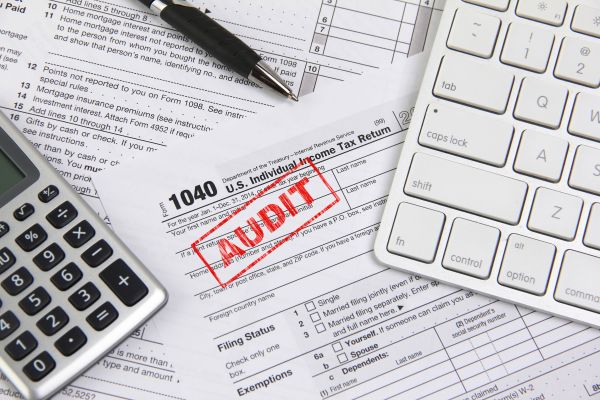
High-Profile, Complex Tax Crime Experience
Our criminal defense firm has represented individuals in high-exposure tax investigations, fraud cases, and federal benefit matters. News outlets including Law360 have highlighted significant outcomes achieved for our clients, such as an Ex-NBA Player charged in a fraud scheme. These results reflect our ability to navigate complex financial criminal matters with precision and skill.
“If you’re looking for one of the best lawyers in America, don’t hesitate to call LaMarche Safranko Law. Mr. Safranko along with everyone on his staff are highly professional and really has their clients best interests at heart. Mr. Safranko is more than a lawyer, he’s an individual that makes his clients feel as if they’re part of his family and that’s why I give him 10 ⭐️⭐️⭐️⭐️⭐️⭐️⭐️⭐️⭐️⭐️!!”
Ex-NBA Player Gets Time Served In Benefits Fraud Scheme – Law360
FAQs About Tax Crimes
Tax offenses, like other types of white-collar crime typically involve non-violent, financially motivated decisions. Tax violations may involve any number of crimes including failing to file a tax return, falsifying information on a tax return, failing to report total income, selling untaxed goods, criminal tax fraud, schemes to defraud including material fraudulent representations, and hiding or misleading information on out-of-state transactions. If you are charged with a tax crime or are under investigation for a tax crime or fraud, you should contact a criminal defense lawyer who handles tax crimes immediately.
Yes. Although New York State and Federal prosecutions have similar components, federal matters focus on your federal tax consequences and liabilities while New York has jurisdiction only over your New York state tax return. It is possible that one of your returns was proper whereas the other was not. If both have alleged improper information, both the federal and state governments can file charges against you, and both may proceed in their own separate courts. Importantly, not all tax cases are necessarily criminal, and some can potentially be resolved without a criminal prosecution. If you are contacted by the Internal Revenue Service or the New York State Department of Taxation and Finance, it is very important to contact an experienced Criminal Attorney who handles tax cases to help guide you through this difficult process.
In New York, you would likely be contacted by the Department of Taxation and Finance or Internal Revenue Service. It is uncommon for the state to immediately file criminal charges and seek seizure or garnishing of wages. In certain cases, New York law allows for the filing, or in relevant circumstances refiling, of past years’ tax returns. Ultimately the matter could end there, or perhaps there could be additional penalties owed. Regardless of whether there would be additional fees or fines, they are far preferable to defending the matter in criminal court.
Usually, tax crimes come in the form of intentionally acting in a way to avoid paying your taxes. This may include false information in your returns, under-reporting income, or not reporting any specific source of income. It also covers inflating legitimate deductions or falsifying one or more deductions completely. It is also a tax crime to assist someone in any of these scenarios – either in their filing or in creating false documents to cover for the fraud. Finally, it is a crime to not file your tax returns for three consecutive years where there is a tax liability.
Being selected for a tax audit does not automatically mean the government intends to charge you criminally, or even that they have uncovered any wrongdoing. However, even minor, or innocent mistakes can cause problems when uncovered during an audit. Usually audits are done either through the mail, or in-person at your home or business. Mail audits are usually requested by the tax agency for certain documentation or other supporting material you have that correspond with your return. These tend to be less onerous than when the agency wishes to meet with you at your home or office to review this information in person. It is important to involve experienced Certified Public Accountants if you are audited. If you receive a subpoena requesting the production of documents, you should contact a criminal lawyer who handles tax cases immediately.
Possibly. Even if you do not believe you did anything improper, any mistake the audit uncovers could potentially result in serious consequences. Therefore, you should consult with a criminal lawyer who handles tax cases who can talk with you and provide advice and guidance. It is also important to work with an experienced Certified Public Accountant that has worked with audits and criminal cases. Tax cases are serious and complex. Working with accountants and criminal defense lawyers who understand these types of cases will be beneficial for you.
Yes. Although an investigation may start as a civil inquiry, if any criminal conduct is identified you may be charged with a crime. If you are convicted of a crime, you face monetary penalties in addition to incarceration and a criminal record.
Perhaps. In many instances, criminal investigations can resolve by reaching a negotiated settlement to avoid criminal prosecution. If a settlement is reached, you can be ordered to stop performing a certain action or pay penalties, interest, and other monetary damages.
Yes. The prosecutor and the Judge will consider the seriousness of the tax evasion, the amount of money owed, your ability to repay the taxes, penalties, and interest and any other history you have. For these reasons, it is important to work with a criminal defense lawyer who handles tax prosecutions and an accountant as soon as you are contacted regarding any issues concerning your taxes.
In New York, any felony, including tax crimes, has a statute of limitations of five (5) years. Federally, the statute of limitations is six (6) years. Usually, the time begins to run after the last criminal act took place, which in many cases may be the filing of the return itself.
Yes. Aiding or assisting in a false tax return does not require being the last person to file it with the government. Others who may still be liable for improper returns include:
- Corporate Officers
- Corporate Tax Form Preparers
- Tax Shelters
- Promoters of not filing taxes
- Supplier of false information
- Your spouse
Yes. Your spouse is deemed to know what is submitted on a tax return that is filed jointly. However, if your spouse does not work with the finances or is not aware of any issues or problems with the return, your spouse may be able to claim innocence. If this occurs, the spouse will not be held responsible criminally or be responsible for amounts that are owed to the Internal Revenue Service or the New York State Department of Taxation and Finance.
Criminal Tax fraud requires that you have committed a tax fraud act. Fraudulent acts are defined by New York Tax Law §1801 and include the following:
- Failing to make, render, sign, certify, or file a return.
- Knowingly submitting a return with materially false or fraudulent information or which omits material information.
- Knowingly supplying materially false or fraudulent information for a return,
- Engaging in any scheme to defraud any tax imposed.
- Failing to remit any tax collected.
- Failing to collect any tax required.
- Intentionally evading paying of a tax.
- Providing false information or omitting material information from documents submitted claiming taxes do not apply to a given transaction.
Criminal Tax fraud in the fifth degree is any tax fraud act, of any amount. It is an A misdemeanor, meaning you face up to 1 year in local jail, 3 years of probation, fines, and court fees, as well as restitution in the amount defrauded.
Criminal Tax fraud in the fourth degree is any tax fraud act amounting to over $3,000. It is an E felony, meaning you face up to 4 years in prison, 5 years of probation, fines, and court fees, as well as restitution in the amount defrauded.
Criminal Tax fraud in the third degree is any tax fraud act amounting to over $10,000. It is a D felony, meaning you face up to 7 years in prison, 5 years of probation, fines, and court fees, as well as restitution in the amount defrauded.
Criminal Tax fraud in the second degree is any tax fraud act amounting to over $50,000. It is a C felony, meaning you face up to 15 years in prison, 5 years of probation, fines, and court fees, as well as restitution in the amount defrauded.
Criminal Tax fraud in the first degree is any tax fraud act amounting to over $1,000,000. It is a B felony, meaning you face up to 25 years in prison, 5 years of probation, fines, and court fees, as well as restitution in the amount defrauded.
Also, Repeated Failure to File Personal Income Earnings Taxes is a crime in violation of New York Tax Law §1808. It is an E felony, meaning you face up to 4 years in prison, 5 years of probation, fines, and court fees, as well as restitution in the amount owed from the unfiled years.
New York tax crimes are contained in the Tax Law, generally from §§1801 to 1809. The most common there are Criminal Tax Fraud in the fifth (§1802), fourth (§1803), third (§1804), second (§1805), and first (§1806) degrees.
It is also a crime to not file three (3) consecutive years of taxes (§1808).
Federal tax crimes are found at 26 USC §7201 which criminalizes actual or attempts to evade or defeat tax.

