


Charged with a Crime? Don’t Waste Time. Call 844-ACCUSED
Charged with Fraud?
Fraud Defense Lawyers | Albany to Plattsburgh, NY
Fraud charges in New York and federal courts carry serious consequences, and working with an experienced fraud lawyer is essential to protect your rights. Fraud charges in New York could include possible jail time, financial penalties, and long-term damage to your reputation. If you are being investigated or accused of any type of fraud, it is crucial to work with criminal defense attorneys who understand the complexity of fraud cases. At LaMarche Safranko Law, our fraud defense team has decades of experience defending clients against state and federal fraud charges, providing strategic guidance from Albany to Plattsburgh and throughout Upstate New York.
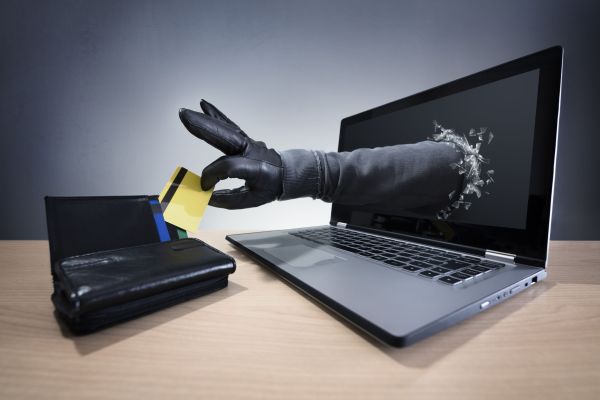
Fraud Charges in New York and Federal Court
Fraud involves an allegation of intentional deception to obtain money, property, or another benefit. These cases often include financial records, electronic data, and detailed investigations by law enforcement or federal agencies. Because of the potential impact on your career and future, having knowledgeable legal representation early in the process is essential. Our fraud defense attorneys defend clients facing a wide range of fraud allegations, including welfare and insurance frauds, healthcare fraud, identity theft, bad checks, mortgage fraud, bank fraud, mail fraud, wire fraud, Medicare/Medicaid fraud, criminal impersonation, forgery, filing false instruments and documents, benefits frauds and frauds against an employer or an employee.
From Albany to Plattsburgh, our criminal defense team represents clients in cases involving government benefit claims, healthcare billing issues, alleged identity theft, financial disputes, lending documents, electronic communications, and accusations involving false or altered documents. Fraud investigations are often built on extensive records, emails, and agency reports, and we have the experience to identify weaknesses, challenge improper evidence, and negotiate or litigate as needed.
With decades of combined trial and negotiation experience, our fraud lawyers are recognized for their work in complex criminal cases, including serious fraud matters. We understand how fraud investigations unfold and know how to protect our clients from overly aggressive prosecution, misinterpretations, and investigative errors. Whether in state court or federal court, we build strong defenses aimed at reducing charges, avoiding convictions, or achieving dismissals whenever possible.
FAQs About Fraud Charges
In general, fraud is the intentional use of deceit, a trick, or dishonest means to deprive someone of money, property, or a legal right. As set forth above, there are many types of frauds with different elements that pertain to each crime. Criminal fraud cases and their severity often depend on what was obtained, and how much money was involved. In many cases, the amount of money fraudulently obtained dictates the seriousness of the charge. It is important to contact a criminal lawyer who is experienced in handling fraud cases.
A scheme to defraud is a criminal charge that results when a person engages in a course of conduct with the intent to defraud more than one person or to obtain property from more than one person by false or fraudulent conduct or actions and does actually obtain the property. Schemes can be very serious, and you might be able to be charged for crimes outside the normal statute of limitations if the scheme is alleged to be ongoing.
Yes. Depending on the allegations, you could be facing both a civil lawsuit as well as a criminal prosecution. In a civil proceeding, you will be sued for money that was allegedly taken as part of the fraudulent act. In a criminal case, the government can seek to punish you with not only restitution or fines, but also potentially jail or probation, and a criminal record. Also, a guilty plea or conviction in a criminal case would likely critically impact your ability to defend yourself in a civil proceeding or to potentially continue to work in certain businesses.
Possibly. Often, state assistance is provided in the form of welfare, unemployment, or HEAP (Home Energy Assistance Program). Any time the state is providing monetary assistance, you must complete paperwork and make certain factual guarantees. Sometimes, guarantees are made on a weekly or monthly basis such as how many hours per week you work, whether you have any other source of income, and how many applications you sent looking for jobs.
Incorrect, inaccurate, or false information, even innocently made, can result in you receiving more money than you legally should. Government agencies often check on information provided to them, and if they find conflicting information, they will contact law enforcement and a prosecutor’s office who will bring charges against you. If a governmental agency contacts you to speak to them about money you have received, you should treat the situation just like you were contacted directly by the police and respectfully request to speak to an attorney.
In New York, simply bouncing a check is not a crime. However, if you wrote the check with knowledge of the insufficient funds, criminal charges would be proper. If you are charged with the crime of Issuing a Bad Check, the business will likely seek prompt payment from you. Before making any payment while charges are pending, talk to your attorney about what is owed and how and when payment should be made.
Yes. If you knew the information was false when you filed it with the state, you may be guilty of a crime. You do not need to receive money to be charged with a crime. Rather, the act of providing the false information itself is a crime. If the information you provided was an innocent error, it may be a simple correction. Whether the government believes the error was a mistake as opposed to a fraudulent act may hinge on: how severe the mistake was; how prevalent it is or how often you made it; if it resulted in a large benefit to you; how obvious it should have been; and how long it takes for you to realize and rectify it. The most important thing is not to ignore or overlook an error when you realize it or when another person brings it to your attention. Your actions upon discovery will be critically analyzed by the government when it reviews the documents for potential criminal charges.
Yes. This is outside free speech if your lie makes another person submit to your pretended authority, that likely is a crime. For example, if you are pretending to be a police officer, with fake lights and sirens, badge, and uniform, and pull someone over, you will likely be charged with a crime. Practicing law or medical services while falsely holding yourself out as holding those professional degrees are also crimes.
Maybe. For Forgery charges, what is important is whether the document was made without authorization. It is very common in committed partnerships for one partner to give the other partner the authority to sign a document or check on behalf of the other. Because of that authorization, even though you are signing their name, the document was not falsely made.
However, if spouses each have individual bank accounts, and for those specific accounts they both know only they themselves have authority to write a check, the simple virtue of marriage would not allow one spouse to sign the other spouse’s name. This is also important during separation or during divorce proceedings. Signing any document, financial or otherwise, as your partner during such times can be criminal, and the simple fact that you were still legally married is not a defense.
Yes. In New York, it does not matter if the person lost any money. If you used their credit card without permission, it is a crime. Certainly, if the person did lose money, the more they lost, the more serious the charge against you would be. But even no loss is still a crime. New York’s Identity Theft crimes cover this type of action. While usually we think of this type of fraud for internet or complicated matters, it can also be applied in cases where you use any number of names, codes, or numbers that do not belong to you like somebody’s:
- Telephone number
- Debit / Checking account
- Computer System password
- Electronic signature
Any time you are using any identifying information to benefit yourself, be sure you have the proper authority to do so.
Potentially. If you are a professional who contracts work for homes or businesses, there are facts and circumstances that the government considers when deciding whether they believe a disagreement is a civil contract dispute, or a criminal fraud or theft. The police or prosecutor will consider how much money was paid upfront; how much work was completed, if any; whether any tools or materials were purchased in advance; and the nature and character of the work provided. If the police contact you to discuss the job or the contract, they are likely doing so as part of a criminal investigation and in all cases, you should contact an attorney prior to speaking with them.
Possessing a fake ID or license is considered a crime regardless of any person’s age. To learn more about the consequences of being caught with a fake id or license click here.

